
Orthodontics
- Home
- Orthodontics
Introduction to Orthodontics
Orthodontics is a branch of dentistry that specializes in diagnosing, preventing, and treating dental and facial irregularities, primarily focusing on the alignment of teeth and jaws. The main goal of orthodontics is to improve the appearance, function, and overall health of the teeth and mouth by correcting misalignments such as crooked teeth, overbites, underbites, crossbites, and gaps between teeth.
Orthodontic treatment typically involves the use of devices like braces, aligners, retainers, and other appliances to gradually shift the teeth into a more optimal position. Treatment can be beneficial for patients of all ages, whether it’s to improve aesthetics, prevent potential dental problems, or enhance functionality. An orthodontist, a dentist specially trained in this field, assesses the alignment of teeth and the jaw, and recommends the most appropriate treatment plan tailored to each individual’s needs.

Types of Orthodontic Treatments and Benefits
- Braces:
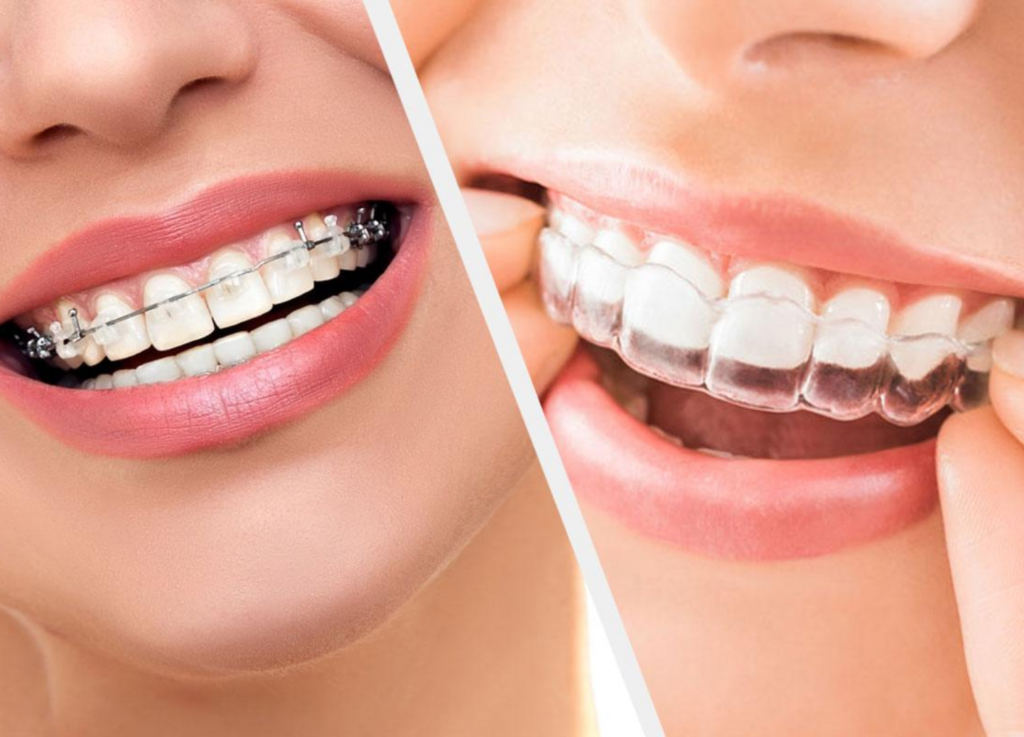
Braces are the most common orthodontic treatment for correcting misaligned teeth. They consist of brackets attached to the teeth, connected by a wire that is periodically tightened to gradually move the teeth into the correct position. There are several types of braces, including:- Metal Braces: Traditional braces with metal brackets and wires.
- Ceramic Braces: Similar to metal braces but made from clear or tooth-colored materials for a more discreet appearance.
- Clear Aligners:
Clear aligners, such as Invisalign, are a popular alternative to traditional braces. These are custom-made, removable trays that gradually shift teeth into place. They are transparent, making them nearly invisible, and can be removed for eating, drinking, and brushing. Clear aligners are often preferred by adults and teens who want a more discreet orthodontic treatment.